
TRANSPORTATION ENERGY 2026 ANNUAL CONFERENCE
Clarity Through Connection: Navigating the Future of Transportation Together
In an era of rapid technological change and evolving consumer expectations, clarity is essential for making informed decisions that drive progress. By fostering meaningful connections—between industry leaders, policymakers, innovators, and communities—we create a shared understanding that transforms complexity into opportunity.
April 20-22, 2026
Fort Worth Club
306 W 7th St, Fort Worth, TX 76102
Agenda
Monday, April 20
(For those who registered for the Pre-Conference Field Trip. Starting Location: Fort Worth Club)
12:00pm Lunch
1:00 – 5:00pm Field Trip – Retail Locations in the DFW MetroPlex
5:00 – 7:00pm Welcome Reception – Fort Worth Club (Open to all Conference attendees)
Tuesday, April 21
9:00am
Opening Comments
John Eichberger, Transportation Energy Institute
9:15am
Beyond the Barrel: The New Realities of Global Transport Fuels Debnil Chowdhury and Heather Killough, S&P Global Commodities
Navigating today’s transportation fuel markets requires a clear view of shifting fundamentals, evolving politics, and the accelerating energy transition. In this session, S&P Global Energy experts Debnil Chowdhury and Heather Killough will cover the current landscape for transportation fuels, highlighting key supply–demand trends, refining margins, trade flows, and regional dislocations that are reshaping opportunities and risks. They will also cover the high-level political and policy environment—U.S. and global—and explain how regulation, the impact of AI on electrons versus molecules, and decarbonization targets are influencing investment, refinery utilization, and infrastructure decisions across both traditional and renewable fuels.
Using S&P Global’s own data, outlooks, and benchmarks, Debnil and Heather will illustrate how these forces show up in real-world price signals, crack spreads, and adoption trajectories for alternatives such as biofuels and other low‑carbon liquids. Attendees will gain a framework for interpreting market volatility, stress‑testing strategies, and making better‑informed commercial decisions—whether you are buying, selling, transporting, financing, or simply trying to understand where transportation energy is headed next.
![]() | Debnil Chowdhury — S&P Global Commodity Insights At S&P, Chowdhury has been involved in various refined product market studies across different regions and has collaborated with private equity, upstream, and downstream clients on project feasibility studies. He played a key role in developing S&P’s proprietary long-term ethane analytics price forecast model as well as PADD level refined product models. Chowdhury holds a BS in Chemical Engineering and Certificate in International Affairs from the Georgia Institute of Technology, a MS in Predictive Analytics and Data Science from Northwestern University, and an MBA from Rice University. |

![]() | Heather Killough — S&P Global Commodity Insights Heather Killough is Sr. Director of Commercial Strategy and Benchmark Advocacy at S&P Global Commodity Insights, where she advances the use of business-critical fuels, renewables, credits, and sustainability data to drive better decisions across the downstream value chain. With more than two decades of leadership in energy markets, including senior roles at DTN and Argus Media, she has led global commercial teams and operations serving the world’s largest energy and agribusiness companies, championing decision-intelligence innovation. |

10:00am
Power Struggle: Can Consumers Keep Up with Rising Energy Costs?
Dan Romito, Opportune LLP
In 2025, retail gasoline prices dropped down below $3 per gallon for the first time in a long while, but electricity rates were up 10.5% since 2023. The fleet was becoming more efficient and diverse with the expansion of hybrids and electric vehicles, but the competing demands for power to support data centers enabling artificial intelligence is putting pressure on the grid. Policy agendas focused on reducing carbon emissions are beginning to be looked at with a fresh perspective, but the pressure to reduce emissions is not abating. How does the market balance the competing interests of lower emissions and providing sufficient affordable supply to consumers?
![]() | Dan Romito — Managing Director, Opportune His extensive publication record further underscores Dan’s influence in finance, sustainability, and energy. With over seventy published writings on topics such as Energy Policy, Sustainability, Investor Behavior, Passive Ownership, and Shareholder Activism, his work has been featured in several global periodicals, including Harvard Business Review, the Harvard Law School Forum on Corporate Governance, CNBC, Bloomberg, Hart Energy, and TD Ameritrade. Dan has given more than 250 presentations to policymakers, corporate boards, regulators, and investors on topics including the state of the capital markets, global energy policy, fossil fuel advocacy, and sustainability strategies. He is also the author of The Radical Middle: How Fossil Fuels and Renewables Can Collaborate On The Future of Energy and the host of the PetroNoia podcast. Dan received a BA from the University of Chicago and an MBA in Finance from DePaul University. He serves on the IPAA Capital Markets Committee, is an Advisory Board Member for Marquette University’s Sustainability Lab, sits on PRAGMA’s Advocacy Committee, and is an adjunct professor at Marquette University, teaching Sustainable Finance. |
10:45am
BREAK
11:00am
Global Outlook: The World’s Energy System is Vast, Complex, and Interdependent
John Gentry, ExxonMobil
As with all commodities, energy is produced in regions of the world with sufficient natural resources and then distributed to various markets to satisfy demand. ExxonMobil takes a deeper look at these dynamic global markets that affect every economy but are misunderstood by many. Integration and global flows of energy are essential for continued economic growth.
![]() | John A. Gentry — Senior Advisor, Corporate Strategic Planning, Exxon Mobil Corporation John joined the company as a financial analyst in 1996 and has held multiple financial and commercial roles in Dallas, Fort Worth, Houston, and London since that time. Immediately prior to beginning his current assignment, John was the head of Risk Management & Insurance and was responsible for managing the corporation’s risk retention/transfer process and the related insurance programs. John received a bachelor’s degree in economics from the College of William and Mary and an MBA from Duke University. John and his wife Shary have two grown children and currently live in Houston. |
11:45am
Energy Markets – How It All Ties Together
Panelists: Debnil Chowdury, S&P Global Commodities, John Gentry, ExxonMobil, Heather Killough, S&P Global Energy, and Dan Romito, Opportune LLP Moderator: Doug Haugh, NewTide Development
After a morning discussing various aspects of the energy market we’re bringing everyone back to the stage for a broad discussion on what this all means. Where do they see the market and industry moving as a whole over the next decade or further? What shifts could change how we think about energy and consumption? Moderator Doug Haugh will guide the panel through a robust discussion with the audience to put everything into context.
12:45pm
LUNCH
1:30pm
Meeting the Moment: Trends and Opportunities at the Intersection of the Power and Transportation Sectors Ben Shapiro, RMI
With demand for electricity once again growing after a sustained plateau in the beginning decades of this century, ensuring sufficient and affordable power supply is critical for meeting customer needs and supporting the growth of new electric end uses. Join this session for a perspective on the historic context of power sector growth and the balance of supply and demand, what current trends suggest the future may hold, and implications for the transportation sector as electric options become available for a growing range of vehicle types and use cases.
2:15pm
Rising Demand, Limited Capacity: Will Charging Infrastructure Perform Under Growing EV Adoption?
Panelists: Florent Breton, Paren and Aaron Young, Electrify America Moderator, Genevieve Comtois, TEI
The number of U.S. public EV fast charging stations increased by more than 34% in 2025, yet infrastructure capacity is not keeping pace with rising demand, a dynamic that is expected to intensify as early EV leases expire and new customers enter the market. As charging networks mature, customer experience is emerging as a key performance lever, requiring more ports that are effectively deployed to deliver reliable service and stronger economic outcomes, informed by utilization data and real-world site delivery experience.
3:00pm
BREAK
3:15pm
Fueling Controversy: Are Biofuels Helping or Hurting?
Panelists: Tristan Brown, Molecule Group and Paul Machiele, Fuel Policy Advisors, LLC
Moderator: Deb Ryan, Swan Mountain Advisory
The U.S. states consumed more than 20 billion gallons of biofuels in 2025, representing nearly 10% of the motor fuel supply in the nation. Yet recent studies have been released that call into question whether these products, using virgin feedstocks, are better for the environment than the petroleum products they displace, whether the land used to produce their feedstocks could be better allocated to alternative uses and whether the policies that support their production and consumption are misguided? TEI has published research which contradicts these findings, but they raise the question – Are biofuels really a viable solution to transportation emissions reductions? This panel will discuss what questions remain, why there remains debate and explore what will be required to reach consensus.
4:00pm
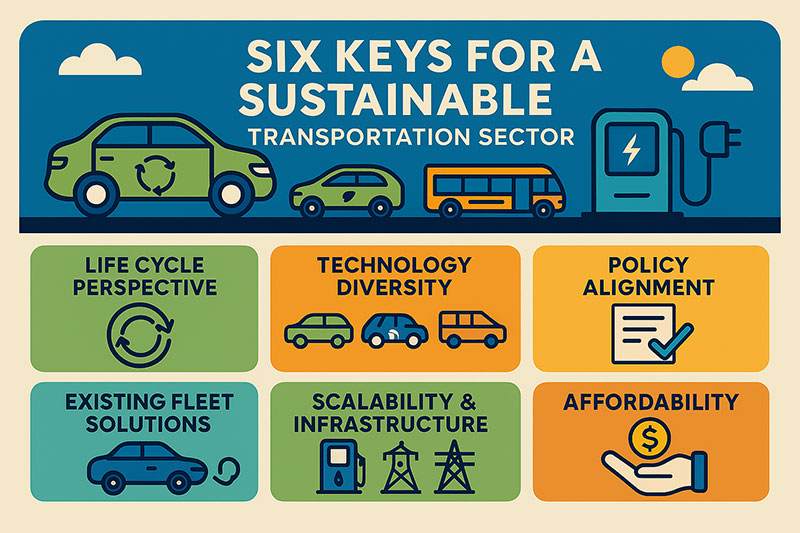
Fleets represent a critical element in the transportation sector and the overall economy. Over the past several years, many fleet managers have focused on decreasing emissions in such a way that satisfies corporate sustainability goals, supports the efficient operation of their service and delivers a return on the investment. With recent changes in domestic policy, there are questions about the continued focus on sustainability throughout the market and which solutions are likely to prove viable in the long term. This session will discuss the considerations that most influence fleet managers as they consider powertrain and fuel options, explore various the options that are most viable for different applications and how the market may develop over the next several years.
5:00pm
5:30 – 7:00pm
Closing Comments
John Eichberger, Transportation Energy Institute
Networking Reception – The Sinclair Hotel Lobby Bar
Wednesday, April 22
9:00am
Mobility is being rewritten in real time, and the leaders who win will be the ones who understand what is changing beneath the surface. In this session, Joe George, President of Mobility at Cox Automotive, unpacks the new economics of miles: how electrification, connectivity, e-commerce, autonomy, and rising customer expectations are transforming the way people, goods, and services move.
With a sharp, real-world lens on fleets, supply chains, service networks, and the hidden systems that keep commerce running, this session challenges audiences to think beyond vehicles and toward the bigger fight ahead: who can deliver miles with the least friction, the most trust, and the greatest operating advantage.
Timely, thought-provoking, and grounded in practical experience, attendees will leave with a fresh framework for understanding the future of mobility and what it will take to lead through it.
9:45am
Why There Is No “Typical Driver”: Rethinking Consumer Decision‑Making and Engagement in Transportation Energy
Ben Custer, Heart + Mind
Too often, communication strategies are built around the idea of a “typical” driver—defined by broad demographics and assumed to behave consistently over time. In reality, the market is far more complex. Drivers make different decisions depending on context: where they live, what they’re experiencing, the constraints they face, and the moment in which a choice is made.
This talk challenges the illusion of a singular customer and explores how market research can uncover the meaningful differences that actually shape adoption, engagement, and behavior. By revealing distinct segments—those to prioritize, nurture, or deprioritize—research helps move strategies away from averages and toward relevance. The result is more effective communication, better alignment with real‑world decision contexts, and stronger returns on transportation energy investments.
10:30am
11:00am
Pulling in Opposite Directions: Federal Policy, State Programs, and the Impact on Transportation Fuel Markets
Megan Boutwell, Stillwater Associations in conversation with John Eichberger, TEI
Federal retreat, state ambition, and a fragile fuel supply system are colliding in today’s transportation energy markets. This session will unpack the growing fault line between federal biofuel policy and expanding state low‑carbon fuel programs, and what it means for fuel supply, prices, and infrastructure investment. Drawing on recent refinery closures, geopolitical shocks, and shifting incentives under the RFS and 45Z, the presentation addresses decarbonization as not just a policy challenge, but a market and supply‑chain stress test. The discussion aims to create a clearer view of the risks, tradeoffs, and signals to watch as the energy transition moves forward in the US and beyond.
12:00pm
LUNCH
1:00pm
Future of Energy Retail
Jeff Burrell, NACS
Convenience stores enable mobility. They sell more than 80% of the gasoline in the United States through more than 120,000 fuel retailing outlets. In 2024, they processed 14.4 billion fueling transactions worth more than $500 billion and served more than 150 million consumers every day. In addition, they operate more than 16,000 DCFC charging ports. Convenience stores are and will remain a critical element in the transportation energy sector for the foreseeable future. As Vice President of Retail Engagement, Education and Research, and with more than 20 years of experience with leading convenience and fuel retailers in the industry, Jeff Burrell has a better understanding than most of the central role convenience stores play in the mobility sector and he will discuss the current state of the industry and where it is going.
2:00pm
2:45pm
Closing Comments and Adjourn
John Eichberger, Transportation Energy Institute
Event Registration
Register now for THE conference of the year for unbiased research and dialogue with key stakeholders in the transportation energy sector.
Media: | Contact: Marjorie Frankel mfrankel@transportationenergy.org | |
REGISTRATION FEE: | STANDARD | |
TEI Contributor | $899 | |
TEI Non-Contributor | $1,099 | |
Government/National Lab | $499 | |
Buy One, Get 20% off each additional attendee from your company | ||
| Sponsor with one complimentary registration | $2,500 | |
| Sponsor with two complimentary registrations | $5,000 | |
| April 20th Lunch/Field trip | $150 | |
Travel
The closest airport is DFW airport
We do not have a host hotel. Hotels within a short walking distance of the Fort Worth Club:
The Sinclair, Autograph Collection
The Hilton Downtown Fort Worth