 Date: Dec 18, 2025 PDF: 114 KB
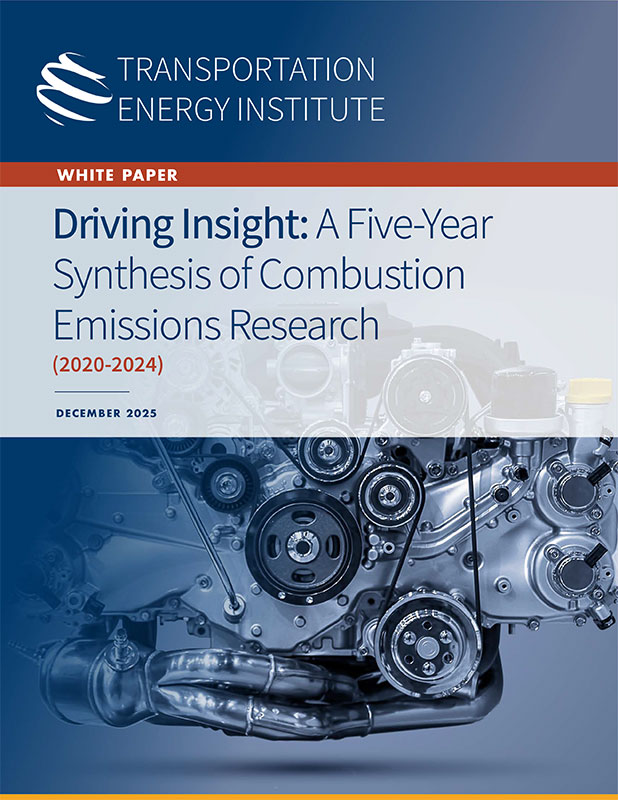
New Report: Driving Insight: A Five-Year Synthesis of Combustion Emissions Research
A Comprehensive Narrative on Reducing Emissions from Combustion Engines
The Transportation Energy Institute is proud to release a groundbreaking report, “Driving Insight: A Five-Year Synthesis of Combustion Emissions Research,” that presents key lessons learned from five years of research and insights (2020–2024) on reducing emissions from the combustion engine market. This report distills hundreds of pages of analysis into a succinct message: there are key factors to consider when seeking to reduce emissions from internal combustion engine vehicles.
TEI has been evaluating options for reducing emissions for years, trying to help the market find solutions that benefit the environment, consumers, and industry. Each report incorporated in this paper stands on its own, but together they present a much more comprehensive assessment of what it really takes to develop an effective strategy to reduce emissions and preserve access to affordable and reliable transportation energy.
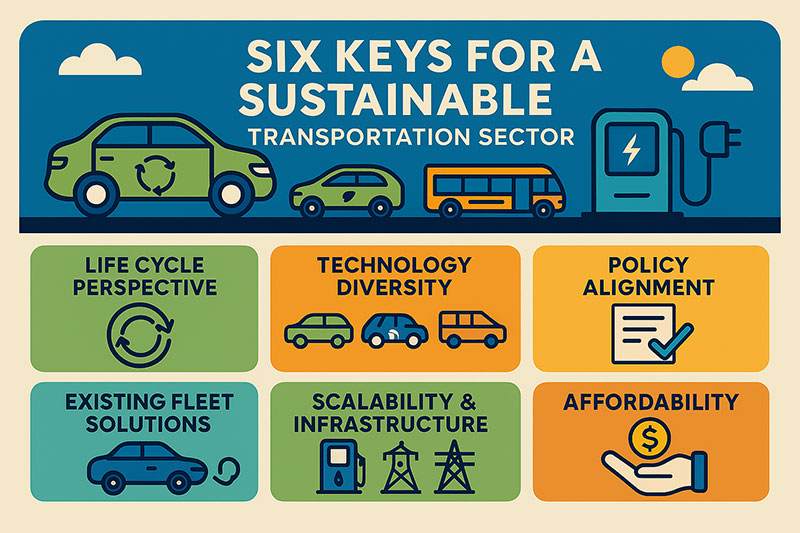
Across the nine reports evaluated in this synthesis, six key themes emerged that are essential for achieving affordable and sustainable emissions reductions:
- Any strategy must be taken with a life cycle view of emissions to have the greatest environmental benefit at the lowest possible cost.
- There is no single solution that will successfully apply to all transportation elements, therefore, strategies must be developed that embrace technology diversity, use case specificity, and leverage a portfolio of solution
- Potential for success is enhanced when government policies provide a framework that aligns business interests with broader environmental objectives.
- Successful emissions reduction from the transportation sector requires attention to finding solutions that apply to the existing fleet – relying solely on vehicle replacement is slow, inefficient, and limits the effectiveness of efforts.
- Any emissions reduction strategy that cannot be produced at scale or delivered to the market is not a solution. Strategies must consider scalability and infrastructure constraints and determine how these limitations can be overcome.
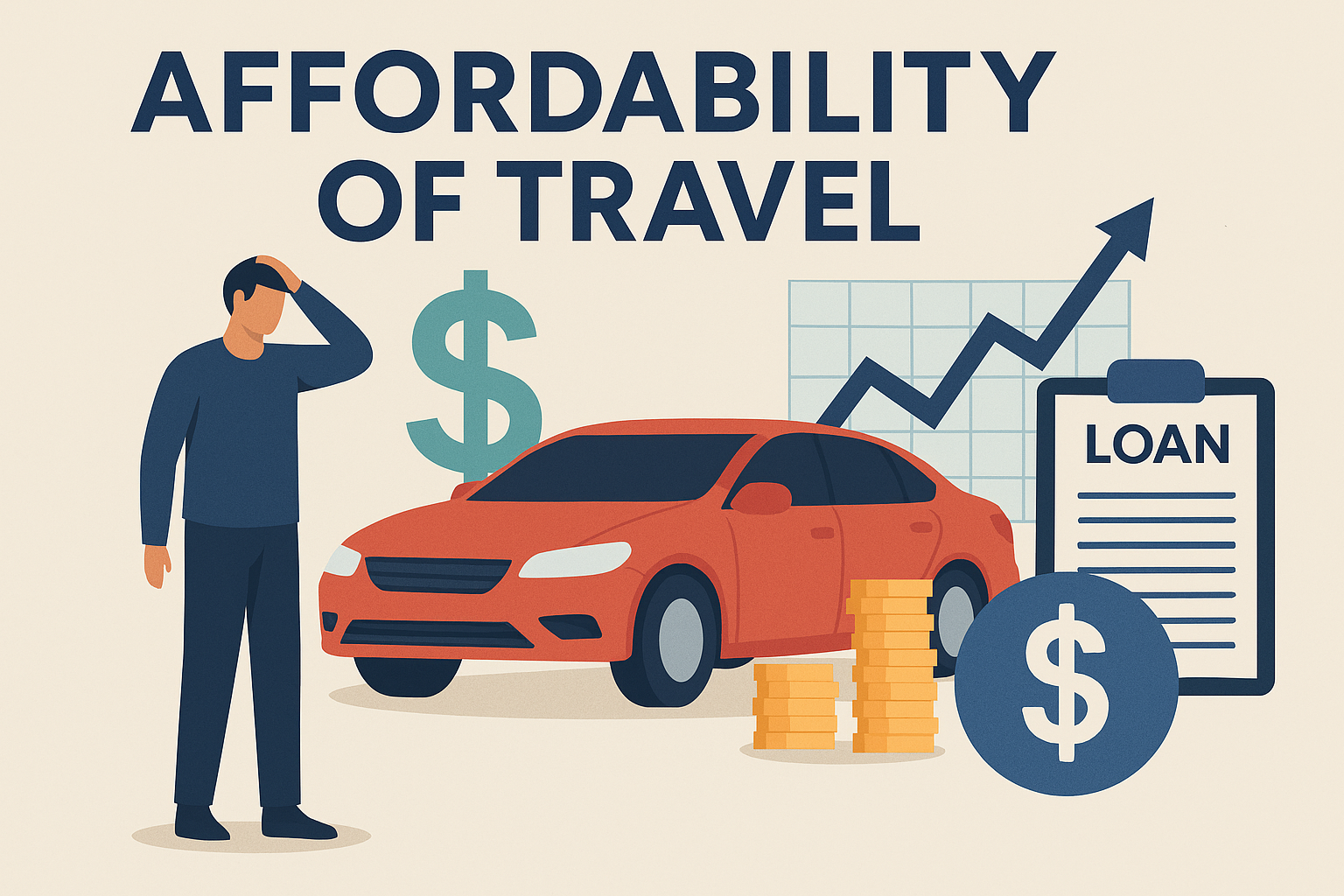
- The affordability of transportation is an essential criterion that must not be overlooked. The economics of developing and deploying a strategy and the impact that has on the end user’s total cost of ownership are fundamental issues that will influence the success of any emissions reduction effort.
This report is a resource designed to help guide discussions within government and industry to help find emissions solutions that are affordable, scalable, and effective. The six themes detailed in the report represent a framework for success and should be incorporated in all deliberations concerning the future of the transportation sector.