The Transportation Energy Institute has unveiled a comprehensive new report that consolidates five years of research and publications—from 2020 through 2025—focused on strategies to reduce emissions from the global combustion engine fleet. With approximately 1.5 billion combustion vehicles still in operation worldwide, this report provides critical insights for policymakers, industry leaders, and stakeholders seeking practical, scalable solutions.
Why This Report Matters
For years, the Institute has published individual studies, press releases, videos, and infographics addressing specific aspects of emissions reduction. While each report offered valuable findings, they often stood alone. This new publication brings together nine key papers into a single narrative, identifying common themes, differences, and lessons learned. The result is a 25-page synthesis that reflects how knowledge has evolved and how strategies can adapt to changing technologies, policies, and market conditions.
“Our goal was to show how we learn and build on past research,” said the Institute’s leadership. “What we know today is far more refined than five years ago, and this report captures that progression.”
Six Core Themes Driving Emissions Reduction
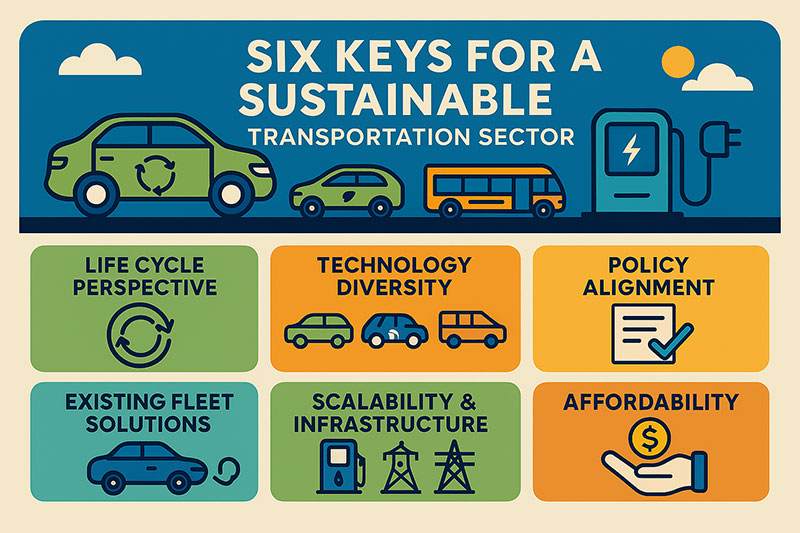
The report organizes insights into six interconnected themes that emerged across the nine studies:
- Life Cycle Emissions Analysis
Reducing emissions in one part of the supply chain is not enough if it increases emissions elsewhere. A holistic, life cycle approach is essential to ensure true environmental benefits. - Technology Fit for Purpose
Solutions must align with specific use cases. What works for passenger cars may not work for heavy-duty vehicles. Economic viability remains a critical factor—if it’s not cost-effective, it will fail. - Fuel and Engine-Based Decarbonization
Strategies for the existing fleet are vital. Improving fuel quality and engine efficiency can deliver immediate benefits while longer-term solutions scale. - Infrastructure Scalability
Infrastructure constraints can limit adoption of new technologies. Understanding these barriers is key to planning realistic pathways for emissions reduction. - Policy and Corporate Alignment
While ESG terminology may be evolving, corporate sustainability goals and regulatory frameworks must work together to drive meaningful change. - Economics and Total Cost of Ownership
Affordability determines success. Solutions must deliver environmental benefits without imposing prohibitive costs on consumers or businesses.
Key Insights from Five Years of Research
The report highlights several pivotal findings:
- Impact of Global Initiatives: A 2020 study analyzed 14 transportation-related environmental initiatives worldwide, assessing scope, feasibility, and effectiveness. This work laid the foundation for deeper exploration of decarbonization strategies.
- Life Cycle Comparisons: Comparative analyses of battery electric vehicles (BEVs) versus combustion engines revealed nuanced trade-offs, reinforcing the need for a balanced approach rather than a one-size-fits-all solution.
- Synthetic Fuels (E-Fuels): Promising but challenging. While e-fuels offer significant emissions reduction potential, high costs and technological hurdles remain. Market evolution will depend on breakthroughs in production economics.
- Carbon Intensity of Liquid Fuels: Reducing carbon intensity in existing fuels can deliver faster, broader emissions reductions than waiting for EV adoption to scale globally.
Looking Ahead
The report emphasizes that 98% of vehicles worldwide still rely on combustion engines, making near-term emissions reduction strategies critical. By addressing all six themes collectively, stakeholders can develop integrated solutions that maximize impact.
“Our mission is to help decision-makers make informed choices,” the Institute noted. “Forecasts will never be perfect, but understanding vulnerabilities and adapting to change is key to success.”
Conclusion
This landmark report is more than a summary—it’s a roadmap for the next stage of market development. By synthesizing five years of research, the Transportation Energy Institute provides a clear, actionable framework for reducing emissions in a way that is practical, scalable, and economically viable.