John Eichberger |
March 2026
Although the headlines have been populated by announcements of automobile manufacturers taking billion-dollar write downs as they reconfigure their electric vehicle strategies, the market for EV charging is poised to experience significant growth in utilization. This is because the EV market is not dead, new EVs will still come to market and be purchased by more than a million customers this year and nearly a million more will enter the used car market as they come off lease. This will increase the number of EVs in operation and change the demographics of the EV customer, resulting in greater utilization of public charging infrastructure.
Current State of the Market
Why so much optimism for the use of public chargers? First of all, let’s take a look at what has happened in the market recently. According to the U.S. Department of Energy’s Alternative Fuel Data Center (AFDC), the number of direct current fast chargers (DCFC) in the United States increased by 52% in 2025.
At the same time, the data set from Paren, Inc. that TEI uses to analyze the market through our Charging Analytics Program (CAP) increased the number of ports from which it collects session data by 72% to 62,457 ports completing more than 13.5 million charging sessions in December 2025. Of these ports, 52% were equipped with the J3400/NACS connector and 30% were equipped with CCS connectors.
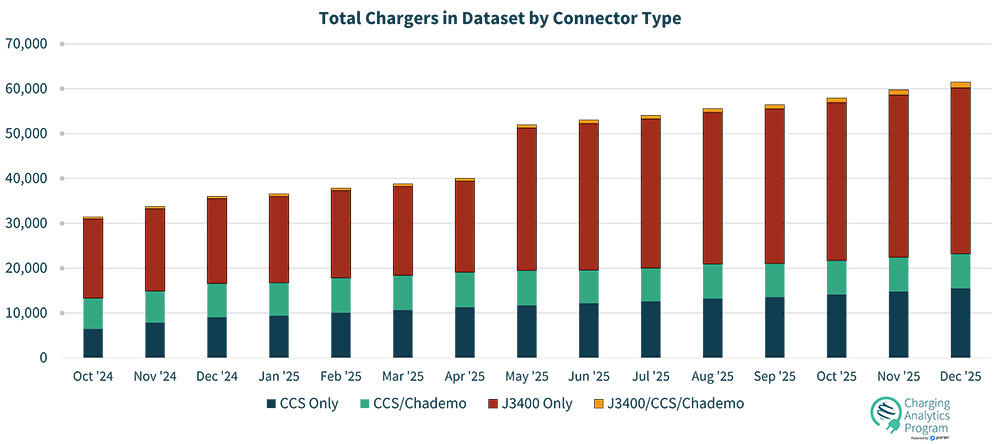
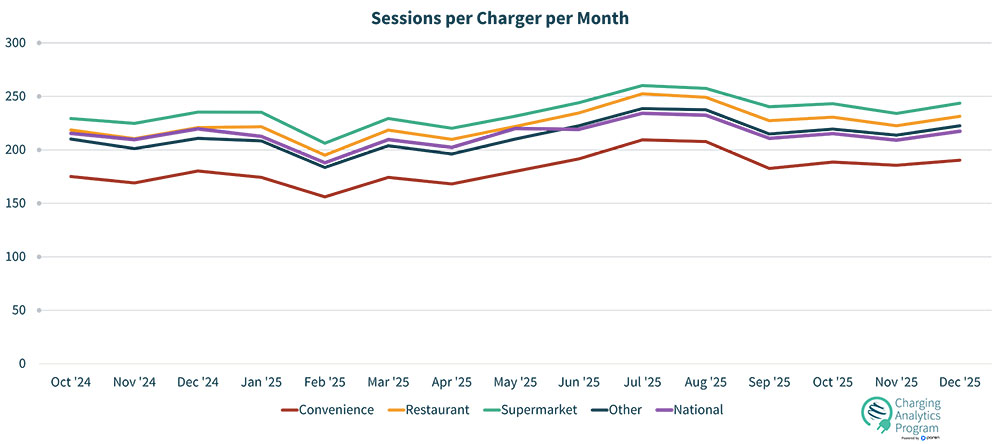
The growth in available public chargers last year was impressive, but what is more indicative of sustained demand is the fact that even with this growth utilization remained relatively steady with each port averaging about 214 sessions per month and a utilization rate of about 16%. This was consistent throughout the year, despite the increase in chargers in operation, indicating that the market is still in the early build-out stages and that supply is not outpacing demand.
Future Growth
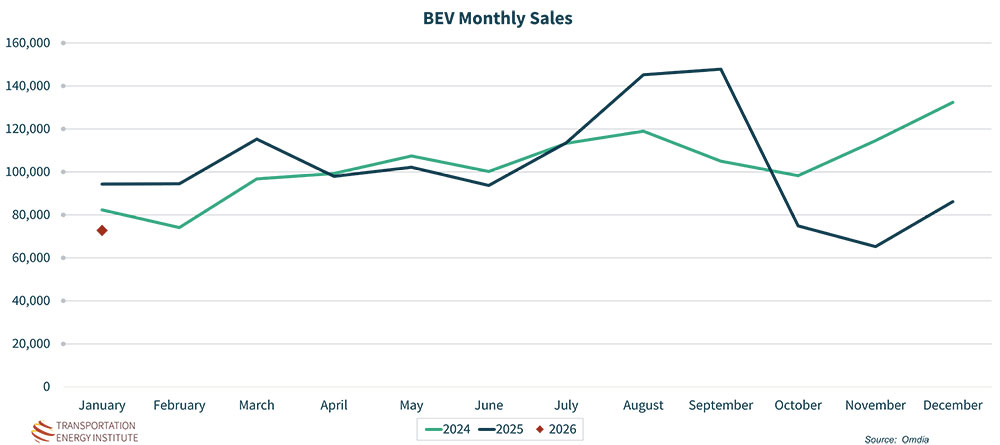
With this historic growth and utilization as the backdrop, let’s take a look at where the market might be heading. At this point, TEI estimates there are approximately 5.5 – 6.0 million EVs in operation in the nation. The loss of the federal tax incentive for purchase of EVs expired September 30, 2025, and sales reacted as one would expect – a sharp increase in sales ahead of that expiration and a drop off immediately following. But what is important to recognize is that sales began to recover in December and January. This is consistent with historic experience when incentives have expired in other markets – sales drop but then recover. The trends in new EV sales following expiration of the incentive leads me to expect that sales in 2026 will likely meet or exceed the 1 million unit threshold again.
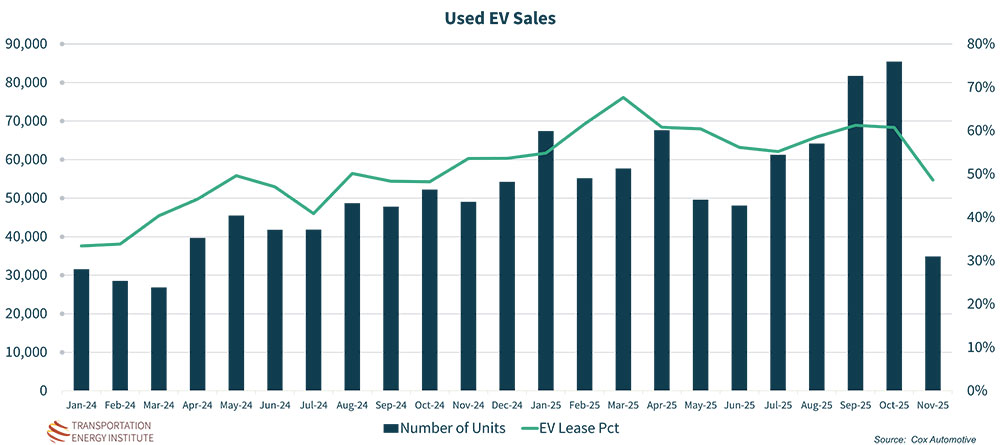
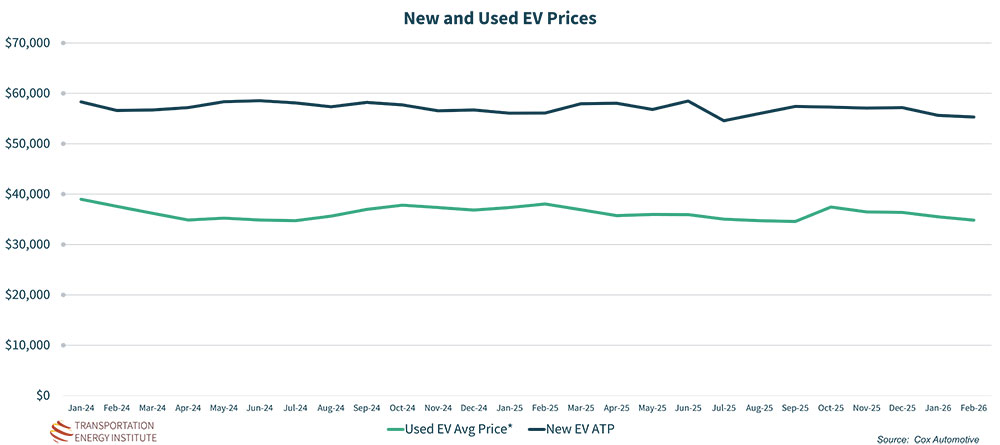
Another key factor to consider is the fact that more than half of EVs acquired the past few years have been leased, and the terms on these leases are set to expire in the next year or so. In fact, in 2024-2025 Americans acquired 1.2 million EVs via lease. These vehicles will enter the used car market at significantly reduced rates, enabling consumers who may not have been able to afford a new EV to enter the electrified market. In 2025, the average price for a used EV was $36,000 and some analysts predict this new influx of used EVs could drive prices below $30,000. So there will be a combination of new buyers having access to more affordable EVs and the high probability of those turning in their leased EVs acquiring another one – in fact, Clean Technica estimates 92% – 96% of EV drivers will purchase another one.
Why is this important?
These facts are important is the raw number of EVs in operation is likely to increase with new EV sales and the sustained presence of resold used EVs. The more significant reason this is important for EV charger utilization is that the used EV buyer could very well represent a very different demographic of EV driver.
To date, the stereotypical EV driver was an individual with an income greater than $150,000 per year and likely to own their own home. This combination increased the likelihood of these vehicles charging at home most of the time. However, if a lower income demographic has access to more affordable EVs, the likelihood of them having a place to charge at home decreases as they may be more likely to reside in multi-family communities that do not have sufficient chargers for all residents. This will compel them to use public charging, thus supporting the utilization of current and new-to-market chargers.
Take-Away
The bottom line is that EVs are not going away and the market for public EV charging may create more opportunities for businesses to benefit from providing such services. A general increase in EVs in operation and the possible evolution of the EV driver demographics to more accurately reflect the general population of drivers is very likely to generate increased demand for chargers. We have already witnessed the market’s ability to support a 52% increase in charger ports, which provides some confidence in the resilience of the market. But if more apartment and condo residents decide to enter the EV ownership market, we very well could witness a significant increase in demand for public EV chargers.
TEI will continue to monitor the market conditions, publishing quarterly CAP reports of charger utilization data to support greater understanding of the market opportunities that this growing segment of the transportation sector may present. And check out research from the TEI Electric Vehicle Council. In 2024, we published a key charging site study, Electric Vehicle Market Insights, which evaluated what EV drivers are looking for from a charging facility. This year, we are working on a new study evaluating consumer experience while visiting a public charger to help businesses offer a charging solution that satisfies the driver and keeps them coming back.
There are lot of new resources and insights coming your way to help you develop a charging strategy that benefits your customers and your business. Stay tuned!