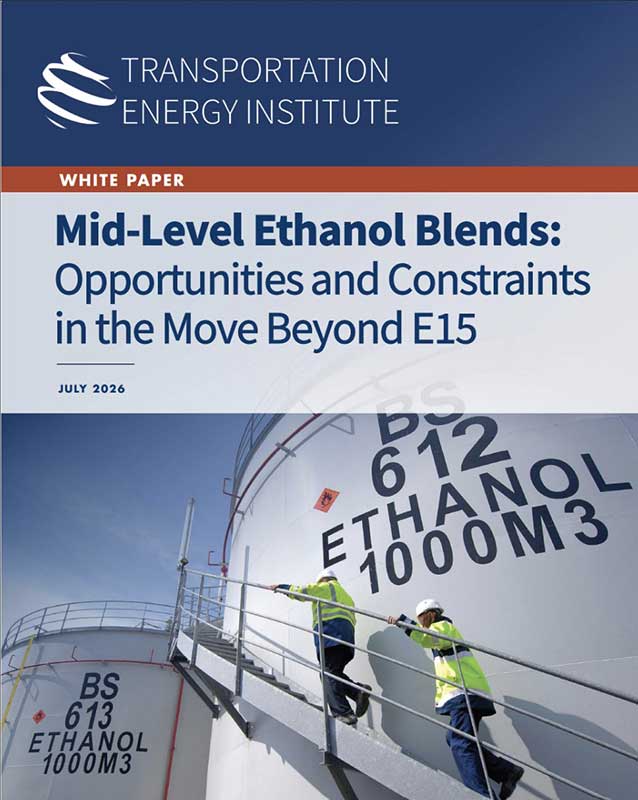
Date: July 28, 2026 PDF: 3 MB
Understanding the Next Phase of Ethanol Utilization
As the U.S. transportation energy market evolves, stakeholders across the fuel, automotive, agricultural, and policy sectors are examining what comes next for ethanol blending. While E15 has received significant attention in recent years, maintaining—or increasing—ethanol utilization in a market characterized by improving vehicle efficiency, vehicle electrification, and declining gasoline demand may ultimately require moving beyond E15.
The Transportation Energy Institute’s latest whitepaper, Mid-Level Ethanol Blends: Opportunities and Constraints in the Move Beyond E15, provides a comprehensive, objective analysis of the opportunities and challenges associated with ethanol blends ranging from 16% to 50%.
What You'll Learn
This research explores the key factors that could influence the future development of a market for mid-level ethanol blends, including:
- The evolving economics and market dynamics of gasoline and ethanol demand
- Regulatory frameworks that influence ethanol blending and market development
- Vehicle compatibility and performance considerations
- Retail infrastructure requirements and deployment challenges
- Consumer value propositions and misfueling concerns
- Environmental, economic, and energy security implications of higher ethanol blends
Key Findings
Maintaining Ethanol Volumes May Require Moving Beyond E15
Declining gasoline demand could make it increasingly difficult to sustain current ethanol volumes without higher-blend fuel options entering the marketplace.
Regulatory Clarity Will Be Critical
The development of a viable market for mid-level ethanol blends will require clear and consistent regulatory frameworks.
Compatibility Matters
Widespread adoption depends on ensuring vehicle, fueling equipment, and infrastructure compatibility.
Opportunities and Challenges Coexist
Higher ethanol blends may offer benefits related to emissions reduction, octane enhancement, agricultural economic activity, and energy security, while also presenting practical challenges that must be addressed for broader commercialization.
An Objective Resource for Stakeholders
This whitepaper does not advocate for or against mid-level ethanol blends. Instead, it provides a fact-based foundation for informed discussion among policymakers, regulators, automakers, fuel producers, retailers, and other industry stakeholders.
This paper can serve as a referenced starting point for discussions about the future of the ethanol market. By examining both the potential advantages and the practical barriers associated with ethanol blends above E15, the report helps clarify the issues that will shape future conversations about transportation energy, environmental goals, and fuel market evolution.
Videos